
Swarm prevention How to deter bees from wanting to swarm. Selection of non swarming stock. Managing brood to maximise production.
Inspections – what good looks like and dealing with problem colonies Based on Ted Hoopers 5 questions (and a sixth I’ve added). Identifying what you should expect to see during the season. Dealing with problem colonies and identifying when you should take immediate action or wait and see.
Simple bee improvement Very simple methods all beekeepers can follow to improve their own bees to be calm, healthy and productive.
Running a queen rearing group Raising queens. Improving stock. Working as a group. Managing a queen rearing apiary
Feeding bees through the seasons The dangers of overfeeding. Feeding in spring. Feeding in the June gap. How bees actually use “winter” stores. When what and how to winter feed.
What beekeepers worry about and don’t need to As a beginner beekeeper I used to constantly worry about my colonies. As a bee-farmer I’ve learned what I really need to worry about and importantly what I really don’t. What equipment is essential and what really isn’t.
The simple Sustainable Apiary for the hobby beekeeper Having a sustainable apiary, a ready supply of replacement queens and nucs ready to replace winter losses and possibly a surplus to supply others. How to produce your own queens and nucs simply starting with a single colony. Producing one or more spare queens for your own use very simply. Producing nucs to cover winter losses before they occur. Minimising the effect on honey production.
Maximising honey production How to ensure an abundant honey crop. The importance of stock. Spring combination. Equalising colonies. Swarm prevention – managing your comb. Supering – why, when and how to add supers.
Replacing Queens Why local queens are best. Selection criteria. When to replace queens. Introducing queens. The importance of Nucs
Synergistic Beekeeping A simple way of: Maximising honey production. Preventing swarming. Making increase. Replacing winter losses
An experiment in treatment free Beekeeping What happened when I stopped treating 10 colonies in August 2019. The impact on production. The impact on drones. Conclusions and how it affected my beekeeping in the long term. What happened next
Fast and slow beekeeping The art of decision making in Beekeeping. Knowing when to take timely action and when to be patient. Making the right decisions for your bees. Getting the best outcomes for you and your bees.
Maximising our time in beekeeping Improving our efficiency. Assessing the opportunity vs the risks. Tasks we can stop doing. Maximising the outputs
Keeping bees without ever finding the queen How to make key manipulations when you can’t find the queen including: Swarm prevention. Swarm Control. Bailey comb change. Splits
The Abberton native bee group. Our journey in reintroducing the native honey bee into the Abberton, Essex Area. What we learned, good and bad.
Booking Information
In person £100 plus travelling costs 45p per mile. By Zoom £50
Overnight hotel accommodation up to £100 for over 100 miles travel.
Please contact Julie Thorn the Bee-farmers Wife Email: julieathorn16@gmail.com Mobile 07557 105495
Kevin’s laptop has an HDMI connection and will require a screen for his presentation.
Bio
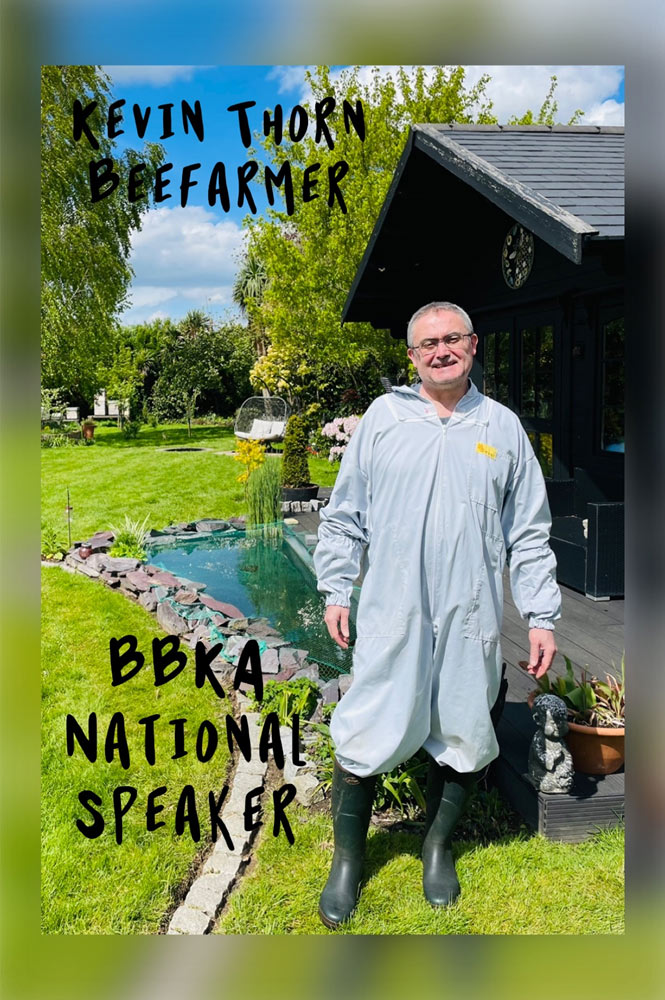
Kevin Thorn is a Beefarmer with 50 hives in and around Lavenham, Suffolk.
Kevin is passionate about improving his bees to be calm, healthy and productive and working to educate beekeepers in this area. He and his wife Julie run Stour Valley Apiaries and Busy Bees Cosmetics.
Kevin has established a Bee Improvement Group at Abberton Reservoir in Essex, working with local beekeepers, Colchester BKA, Essex and Suffolk Water and Essex Wildlife Trust to reintroduce the native black bee to the area.